

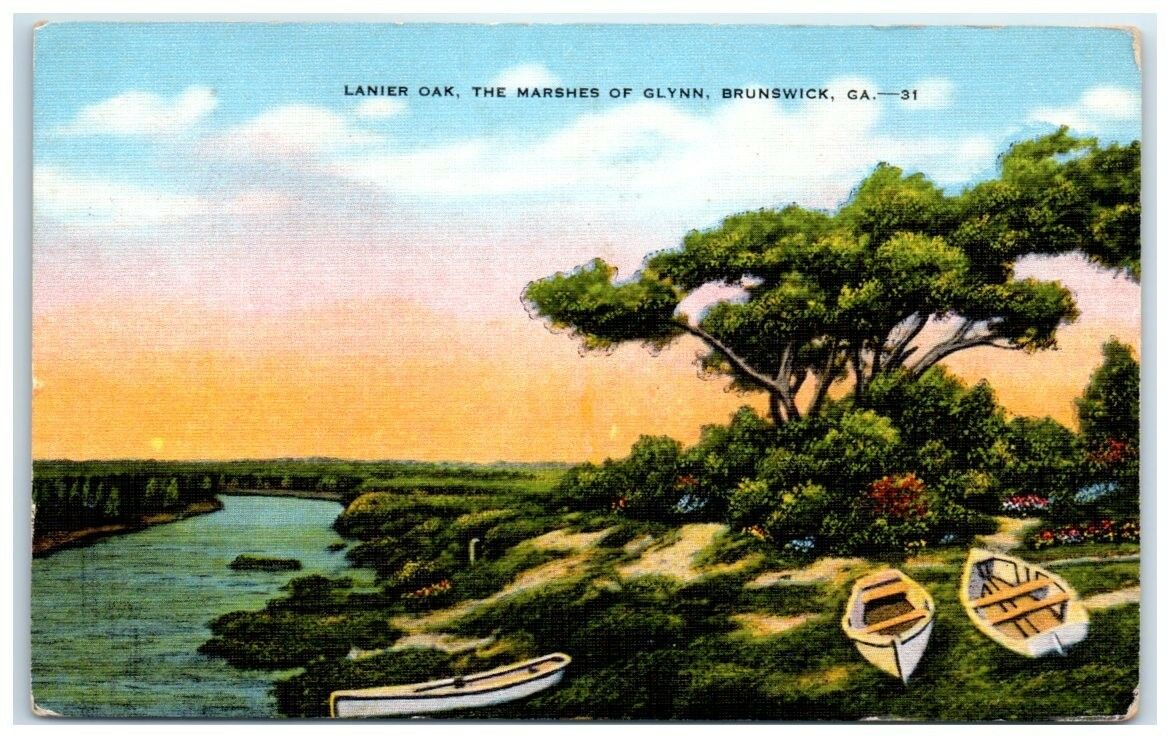
The evening sun was flooding in through the two big windows that my feet were pointed towards as I lay on the couch for a nap. I must have fallen asleep around five o’ clock, shortly after getting home from work. I assume it was then since the sun was still high enough to not make closing the blinds necessary to keep the glare out of my eyes. It was a hot day in South Georgia; rather expected for the middle of August in the Okefenokee Swamp. The newer air conditioning system has quite the task of keeping our old house cool, and when I glanced at the thermostat on the south wall of our living room, it recorded the inside of the house at a warm eighty-three degrees; though it was set at seventy-four. The outside temperature? One could only assume it was above ninety.
I faintly heard the laughter of children in the room on the opposite side of the wall my napping couch is fixed against, and an audiobook was playing in the kitchen where my wife was fixing supper. The sound of the children grew louder as their footsteps registered on the hardwood floors of the hallway, then dining room until they crossed the threshold separating it from the living room. I say living room in the most accurate sense; it was not merely a sitting room; it was the nucleus of our home where most of the living was done. I knew well what was coming next, and yet it still never fails to be a wholly surreal experience. The first set of hands grabbed my thin Bulldogs hoodie; these were quickly followed by the second while the pitter patter of the small feet of the youngest raced to keep up. By the time he made it to me, the other two had dragged their sweaty bodies onto me and I pushed them down onto my legs while I peeled my back from the couch as the sleep left my eyes with every blink. The little, gritty hands of the one-year-old grabbed me next, and I pulled him up to join us.
“Can we walk to the park tonight?” my oldest pleaded. It was really too hot to make assent to the request enthusiastic, but it was also too hot to make being crawled on enjoyable. “Why not?” I thought to myself as I drew a long breath. “Sure buddy, we can walk to the park,” I finally said as the dog walked up to start licking every arm her head could reach. It isn’t a long walk from the front door of our house to either park; the closer, but smaller one being just about three-minute away at a toddler’s pace, while the bigger park is closer to a ten-minute haul with the kids in a wagon. I checked the time, three-minutes past six is what the clock said. Supper wouldn’t be ready until at least seven, and the sun wouldn’t set until past eight. And in any case, it didn’t much matter; it was a Friday night, we always stay up a bit later on weekends. Supper could be postponed. Especially if it meant tuckering the kids out at the park that they might be a bit more friendly to the sandman.
The boys weren’t quite ready to venture out of the house yet. The youngest had just a diaper on, while the older weren’t wearing any shirts. “Hop off so I can get y’all ready,” I said as I dragged my legs out from under their shifting bodies which seemed to weigh more than it made sense for them too. I stopped at the kitchen doorway to tell my wife that I was “fixin’ to walk them to the park,” before I stepped around the corner into their room to find them some clothes. As I walked back by the kitchen, the light was coming in from the westward facing window and hit her just right to make her dirty blonde, almost brunette hair, and face radiate with a glow that reminded me of the gold that encircles the head of Sarah the Righteous in the Hospitality icon that sits in our dining room. “A fitting image of her,” I think to myself and smile as I ponder on the love and devotion that she has for me, her boys, and the baby in her ever-producing womb before turning away to dress the children. As quickly as I can distribute the shirts to the older boys, they are excitedly pulling them over their heads and walking towards the front door while I struggle with shoving the baby into his clothes. “Goodness, how fast can you possibly grow?” I whisper under my breath with more than a hint of frustration which passes as soon as his head and arms pop through the holes of his shirt.
“Alright y’all, do you want to go to the big or little park?” I ask. “The big!” is the reply from the older two. “We can do that. Y’all go say bye to your mother while I grab the wagon,” it’s folded up in the hall closet. I follow them through the living room to grab it while they go bid their momma farewell. They each get a loving hug and kiss from her and file out of the kitchen to the unfolded wagon and begin to pile in while my wife follows close behind to come give me a kiss bye as I open the door. The wagon just barely fits through the doorway, and the wheels always catch on the threshold. I have to pull it pretty hard to get it out on to the concrete landing outside the front door. The sudden jerk topples two boys over and ignites a short spell of crying from the baby; which is quickly hushed once we finally make the transition from the concrete landing to the grass and the sun shines on us while the fresh, humid breeze surrounds us.
There is more than one route we can take to the big park. The most direct is merely two turns; first, a left out of yard, then a left on the main road which carries us straight to the park. While it is the fastest by a few minutes, it is also the least shaded route and is on the road with the highest traffic. Albeit high traffic for our little neighborhood means that one or two cars may pass us during the whole half-mile walk, but that’s one or two more than may pass us if we took a more secluded route. I let the boys decide usually, though. To turn left out of our yard sets us on the more direct path, to turn right brings us to the several more secluded options. I stop at the end of the driveway and ask, “which way do y’all want to go?” “Um…” says my oldest, putting his hand to his chin in a way that implies this is a serious decision, “that way” he says, pointing right. “Is that left or right” I ask him. “It’s right!” He exclaims proudly. “Good job buddy,” I reply to him as I pull the handle of the wagon and start off up the gentle slope that is the first step of our journey.
I am reminded quickly that it is not only the shade and lack of traffic I like so much about this walk. This is far more aesthetically pleasing than the more direct route. The road is older here. It is even still dirt or stone at some places. The homes are older and almost exclusively Greek Revival or Antebellum in architecture. The tall houses have multiple chimneys; the front of the homes are adorned with beautiful white pillars; the yards are green and lush; and the vines wrap around the fences and climb the gables of some homes as if God Himself placed them there. It feels almost stuck in the past. There aren’t many cars in front of the homes; they are all tucked around back or in garages or old carriage houses. What cars can be seen are classics; an old Land Rover here, a classic Cadillac there, and perhaps a half-ton Ford from the early 70s. Life feels old. The Pine Trees are tall and well rooted; the Southern Live Oaks, Magnolias, and Poplars that line drives up to these homes make one reminiscent of a time when Alexander Stephens may have been seen surveying his sprawling antebellum plantation. Yet, it feels sterile, dull, and lifeless.
As we walk, I stop in front of one of these homes, what a sight to behold. The porch wraps around the home as far as I can see, and presumably it meets in the back to complete its full wrap around. Positioned perfectly, as if for a photo shoot are two sets of shiny wooden rocking chairs on either side of the front door with a small table in between each set. The rocking chairs enamored me as I walked as close as I could to the home before the fence stopped us and stared at them. They were perfectly clean and polished, as if they had never been sat in. The seats were not worn down by years of rough denim rubbing the finish off; the wooden deck beneath them showed no signs that the chair had ever even rolled across it before. “What is the point of a rocking chair, if not to sit in and rock?” I thought to myself. As I was staring, I heard one of my sons ask “Daddy, can we keep going?” I looked down at the wagon and the baby thought we had stopped to get out and was trying to climb out while the other two waited impatiently to continue our walk to the park. It was just up ahead around the corner by this point; had it not been for another one of these beautiful homes blocking its view, we could have seen it. “Yes, sorry bud,” I said as I moved the wagon slightly to signal to the baby that we were moving again and he needed to sit down.
As we turned the final corner the park came into view. It’s a large and well-maintained piece of property, perhaps ten acres of space complete with three different playgrounds, swings, and tennis courts. There was an older couple playing what appeared to be pickleball on one of the courts, but aside from them and us, the place was desolate. It looked nice considering a bad hurricane had devastated the neighborhood and park just a few months before; the gazebo that had originally been there had been crushed by a falling tree along with some of the playground equipment. All of which had been replaced or repaired already. The new gazebo always catches my eye.
Before the storm, it was essentially a pole barn built on an elevated concrete pad with railing all the way around and a sidewalk leading to a set of concrete stairs which stepped onto the concrete and under the shade of the roof. The concrete foundation, sidewalk, and stairs remained as they were; but the pole barn had been crushed and replaced by a rectangular prefabricated gazebo which hung over the square foundation at its ends. This was a strange decision; I always thought so when I saw it. Surely the county could have gotten one that matched the foundation better than this one did; perhaps this was cheaper, I couldn’t say with certainty. The gazebo itself is nice enough, just out of touch with the foundation it was laid on. And here, I thought of the rocking chairs again. But not merely the chairs, they were just proof of the sterility of the neighborhood, the lifeless perfection of the whole place. All of it feels as though it was artificially placed on a foundation not built for it.
Occasionally we go to the local library, and there, they have a section dedicated to the history of the town complete with old newspapers and photographs. It was once teeming with life. Downtown was chock full of local businesses; children were captured riding bikes everywhere a camera was facing; people walked about en masse. “What happened?” I always think to myself when I see these old photographs. The polished rocking chairs happened. The new and improperly sized gazebo on the old foundation happened. The freezing in time, the final desperate grasp at beauty and life happened. What good are the yards, the chairs, the parks, if not for people? These are made for man; man is not made for these. Not just anything can be artificially placed on an old foundation; it looks awkward and out of place. Yards cannot be meticulously upkept if children are not running around in them. Rocking chairs must be polished by the denim of a husband’s jeans and the cotton of his wife’s dresses; cleaning spray and microfiber towels can’t replace the life lived in those chairs. The mulch of playgrounds must be compacted by the running feet of children; no machine or tool can replace the process.
“Daddy! Can you push me on the swing?” My middle son’s voice interrupts my thoughts. No matter how big or extravagant the park is, the boys always spend most of their time on the swings. “Of course, buddy,” I say as I start walking towards them. The two younger boys get the bucket swings, and the oldest climbs onto the belt swing. I push one, then the next, and then the next on repeat as the sun is setting lower into the sky. The constant movement of the swinging keeps the mosquitos and gnats off my boys, but I am not so lucky. I must constantly swat at the pesky bugs buzzing around my ball cap. It is nearly seven-fifty, the sun will be down in less than a half-hour, and my wife is almost certainly ready to eat. “Alright boys, it’s time to get going.” I say as I bring each swing to a halt successively and pull the two youngest out of the buckets. Per usual, they issue minor complaints about having to leave the playground, but they reluctantly obey and we walk back to the wagon.
We take the same route home. Past the homes, pillars, fences, and rocking chairs. Through the windows of the homes we can see the occasional flicker of light coming from the television if it’s positioned just right as to be seen through a window; but that is the extent of signs of life we see. There is no one to wave at, no cars pass us. It is serenely dead; a perfectly preserved capsule of a time that none of us ever knew. How does this happen? Undoubtedly it didn’t happen overnight. This type of death takes years and decades; and arguably, the fact that there are still folks to clean the rocking chairs and set the new gazebo in its place is evidence that all hope may not be lost. Perhaps the grandchildren of these folks will come visit one day, maybe they will stay.
As we draw nearer our home, the contrast is almost startling. It is not as big and extravagant as the ones we passed on our walk. It is quite dull and pitiful in comparison. Yet, there we can already see the balls on the ground of the backyard; toys scattered; chickens and a dog running around; a small garden growing; and cars pulled up out front. It is a place teeming with life. The kind of life which built the relics we walked past. “There is hope,” I think as I pull the wagon back onto the concrete landing and jerk it over the threshold of the front door where my beautiful and fruitful wife waits with hugs and supper ready.
The views expressed at AbbevilleInstitute.org are not necessarily the views of the Abbeville Institute.




This is one of those stories that you delight in reading, mainly because of the gratitude for life the author clearly displays. It reminds you of your own experiences as a child. Cheers, Ian.